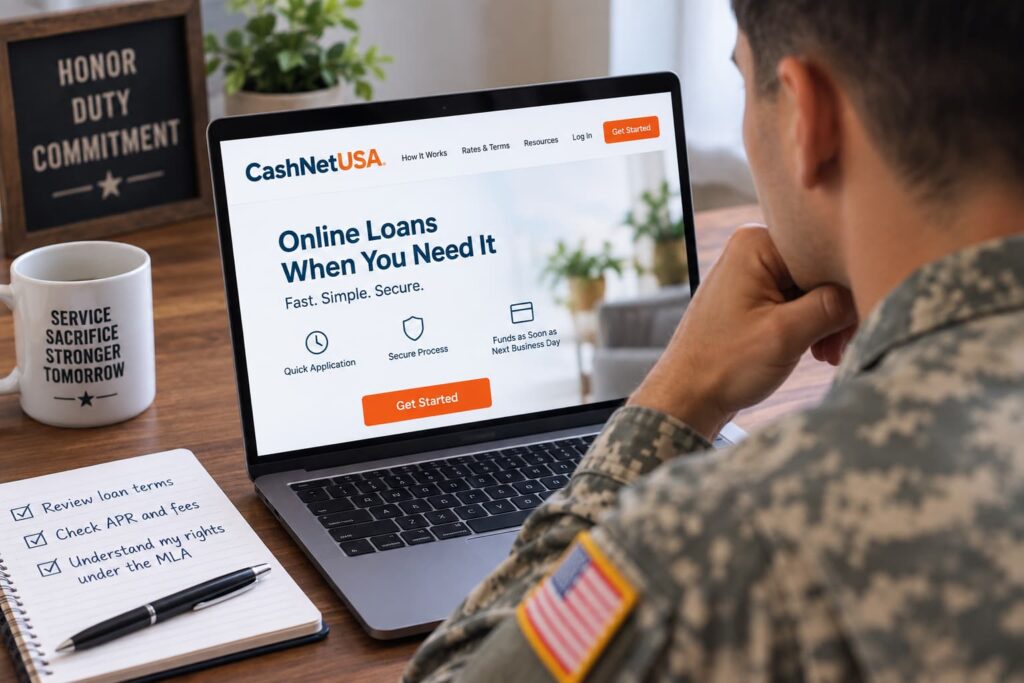
When you received a CashNetUSA loan while you or your spouse was serving on active duty, federal military lending protections may have applied when the credit was extended. People searching for “military payday loan CashNetUSA” may be trying to find out whether their military status changed the rules that applied to a CashNetUSA loan.
The important question is not whether CashNetUSA offered a special loan for military members. It is whether you were a covered borrower when the credit was extended and whether the transaction was covered by the Military Lending Act, or MLA.
If that sounds familiar, the loan date, product, fees, payment terms, and your military status at the time may all deserve a closer look. Let Varnell & Warwick help you figure out your next legal move.

Don’t let predatory lending drain your finances. Contact Varnell & Warwick today to discuss your situation and find out if you qualify for the CashNetUSA class action lawsuit.
Yes, the MLA may apply to a CashNetUSA transaction if the borrower was a covered borrower at the relevant time and the credit falls within the law’s definition of covered consumer credit.
Department of Defense regulations define a covered borrower based on the consumer’s status when the person becomes obligated on the credit transaction or establishes a consumer-credit account. Covered borrowers can include qualifying active-duty servicemembers and certain dependents.
The CFPB explains that payday loans, many installment loans, overdraft lines of credit, and several other forms of consumer credit can fall within the MLA, although the law also has specific exclusions.
The exact CashNetUSA product matters. CashNetUSA’s current website lists different types of credit depending on the state, including lines of credit and installment-style products. That is one reason we do not assume every CashNetUSA account was legally a “payday loan” simply because a borrower uses that term.


One of the first questions to ask is: Were you or your qualifying spouse on active duty when the CashNetUSA credit was obtained?
The MLA’s covered-borrower rules focus on military or dependent status at the time the consumer becomes obligated on the transaction or opens the credit account.
That means your status today does not necessarily answer whether military lending protections were relevant when a past loan was made. If you are retired or separated now but received the credit during qualifying active-duty service, the circumstances at that earlier time may still be important when reviewing the transaction.
If you remember taking out a CashNetUSA loan during active duty but are unsure of the date, your loan documents, account records, bank statements, and military records may help establish the timeline.
If scammers used CashNetUSA’s name to exploit your finances, our consumer protection team can help. Reach out to Varnell & Warwick today to explore your class action legal options.
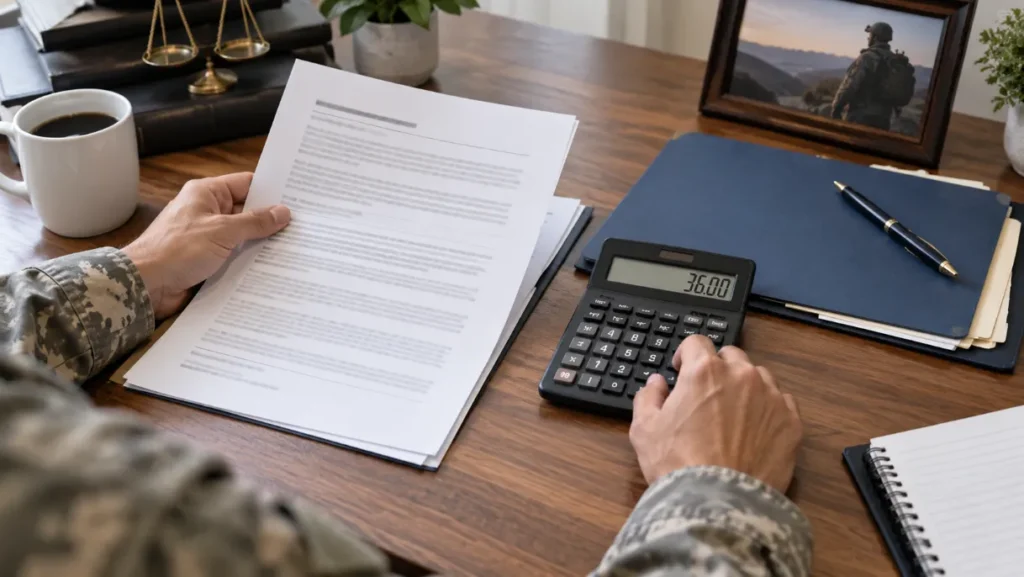
The MLA generally limits the Military Annual Percentage Rate, or MAPR, to 36% on covered consumer credit extended to a covered borrower.
MAPR and the ordinary APR shown on a loan agreement are not always calculated the same way. Federal regulations require certain charges to be included in the MAPR calculation, including some finance charges, credit-insurance charges, and fees for certain credit-related products.
So a loan showing an APR above 36% does not automatically prove an MLA violation. At the same time, a very high APR can be a useful reason to examine the transaction more closely.
The analysis may depend on the loan type, fees, MAPR calculation, borrower status, loan date, state, and other contract terms.


Don’t let scammers who weaponized CashNetUSA’s name keep your money. Contact Varnell & Warwick today to see if a class action lawsuit can help you recover your stolen funds.
The cost of the credit is not the only possible issue under the MLA. Federal law and Department of Defense regulations also restrict certain terms and practices involving covered consumer credit, including some forms of mandatory arbitration, waiver of legal rights, military allotments, refinancing or rollover practices, and prepayment restrictions.
For a CashNetUSA loan obtained during active-duty service, useful records may include your loan agreement and disclosures, the date the credit was extended, APR and fee information, payment history, bank statements showing withdrawals, refinancing or renewal records, and documents showing military status at the relevant time.
You do not need to calculate MAPR or decide for yourself whether the MLA was violated. Those documents can help an attorney understand what happened and which rules may be relevant.


Federal regulations give creditors several ways to determine whether a consumer is a covered borrower under the MLA. A lender may use the Department of Defense database or a qualifying indicator from a nationwide consumer reporting agency. If the creditor follows the timing and recordkeeping requirements, that determination can provide a regulatory safe harbor. The check generally must occur when the consumer initiates the transaction, applies for the account, or within 30 days beforehand.
For a CashNetUSA account opened during active duty, application records and account-opening dates may help show how military status was evaluated when the credit was extended.
The MLA also requires specific disclosures when covered consumer credit is extended to a covered borrower. Before or when the borrower becomes obligated, the creditor generally must provide a statement about the applicable MAPR, disclosures required by Regulation Z, and a clear description of the payment obligation. Certain MLA information must be provided in writing in a form the borrower can keep.
The creditor must also provide the MAPR statement and payment-obligation information orally, either in person or through a toll-free telephone number. These requirements can make the original loan documents and application materials important when reviewing a CashNetUSA transaction.


If a covered credit agreement violates the MLA, federal law provides remedies that may go beyond lowering the interest rate. A prohibited agreement can be void from its inception. A borrower may be able to seek actual damages, with a statutory minimum of $500 for each violation, along with appropriate punitive, equitable, or declaratory relief.
In a successful civil action, reasonable attorney fees and court costs may be recoverable. These remedies are not automatic in every dispute. Available defenses and filing deadlines can affect a claim, so the transaction date and the date a violation was discovered may also matter.
Ready to fight back? Tell Varnell & Warwick how CashNetUSA imposters targeted you, and let’s find out if a class action lawsuit can help recover your financial losses.

Q: Does a high CashNetUSA APR mean the MLA was violated?
A: No. A high APR alone does not establish an MLA violation. The MLA generally limits MAPR to 36% for covered consumer credit, and MAPR can be calculated differently from ordinary APR.
Q: What if I am retired or separated now?
A: Your current status is not the only fact to consider when reviewing an older transaction. The important question may be whether you were a covered borrower when the CashNetUSA credit was extended or the account was established.
Q: Can the MLA apply to a military spouse?
A: Yes, qualifying dependents can fall within the MLA’s covered-borrower rules. CFPB guidance specifically identifies spouses of qualifying service members and, in some circumstances, other dependents as protected.
Q: What if I am not sure whether my CashNetUSA loan was a payday loan?
A: Save the agreement and any account records you still have. CashNetUSA has offered different forms of credit, and product structures vary by state. The actual transaction and its terms matter more than the label used to describe it.
Q: What happens if a loan contract is found to violate the MLA?
A: A credit agreement that violates the Military Lending Act may be considered void from the outset. Depending on the circumstances, the borrower may also have the right to seek damages, attorney fees, court costs, and other available relief
(352) 753-8600
400 N Ashley Dr Ste 1900, Tampa, FL 33602, United States
9:00 AM- 6:00 PM
Closed
Closed
If you or your spouse had a CashNetUSA loan while one of you was serving on active duty, you do not need to decide on your own whether the Military Lending Act applies.
Contact Varnell & Warwick to discuss your situation and whether federal military lending protections may be relevant. Call (352) 753-8600 or email case@vandwlaw.com to schedule a no-cost consultation with one of our attorneys.
This article is for general informational purposes only and does not constitute legal advice. Whether the Military Lending Act, Servicemembers Civil Relief Act, or another law applies depends on the specific facts and circumstances of each situation. Reading this article does not create an attorney-client relationship with Varnell & Warwick.